Making a game in 3 weeks
Jan 1, 2026
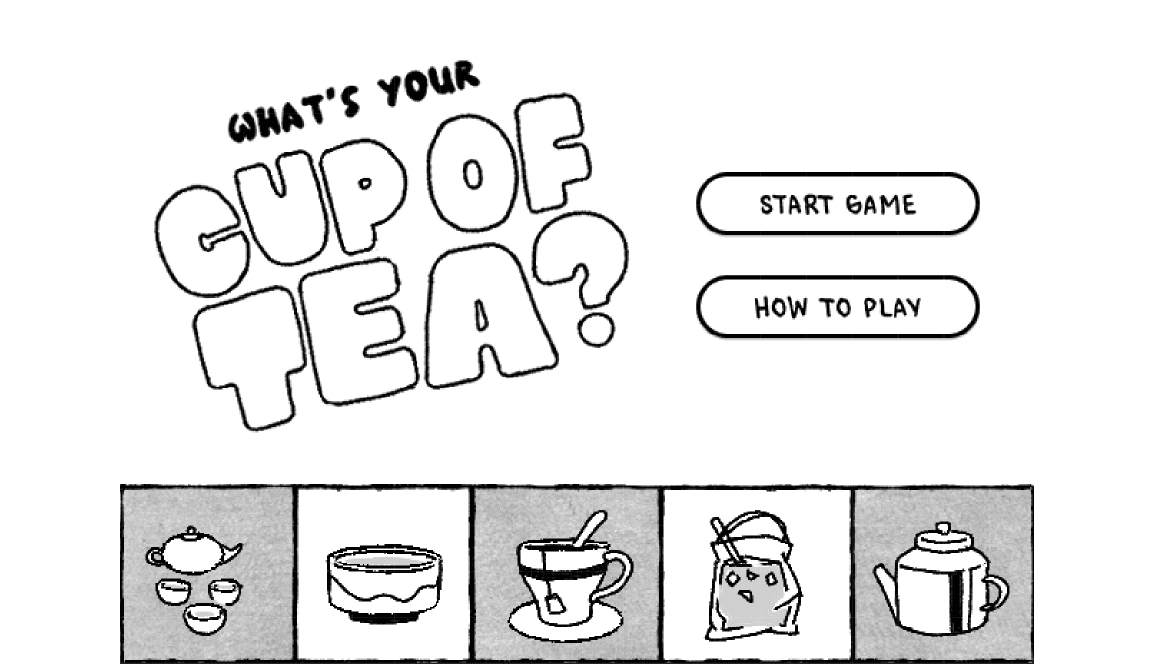
Let's make a game!
In September of 2025, I applied and was accepted to intern with Kontinentalist, a data storytelling studio here in Singapore. I quickly found out that one of the reasons they brought me on was my experience as a hobbyist game dev.
This was unbelievably exciting to me, as game design is a real pipe-dream career of mine—and here I was, getting paid to make one! We set out to make not one, but two games in my four-month stint with them.
Except… client and story work ended up taking precedent (as it should), and before I knew it, I was leaving Kontinentalist in three weeks, without a single game to show for it.
Week 0: The Concept
My supervisor and I had already done the legwork in terms of research, and we decided to create a game to accompany a potential future story on tea culture in Asia. Her idea drew inspiration from real life: what if the player was an intern, going to get different types of tea for their colleagues? From there, I dove into sketching and storyboarding.
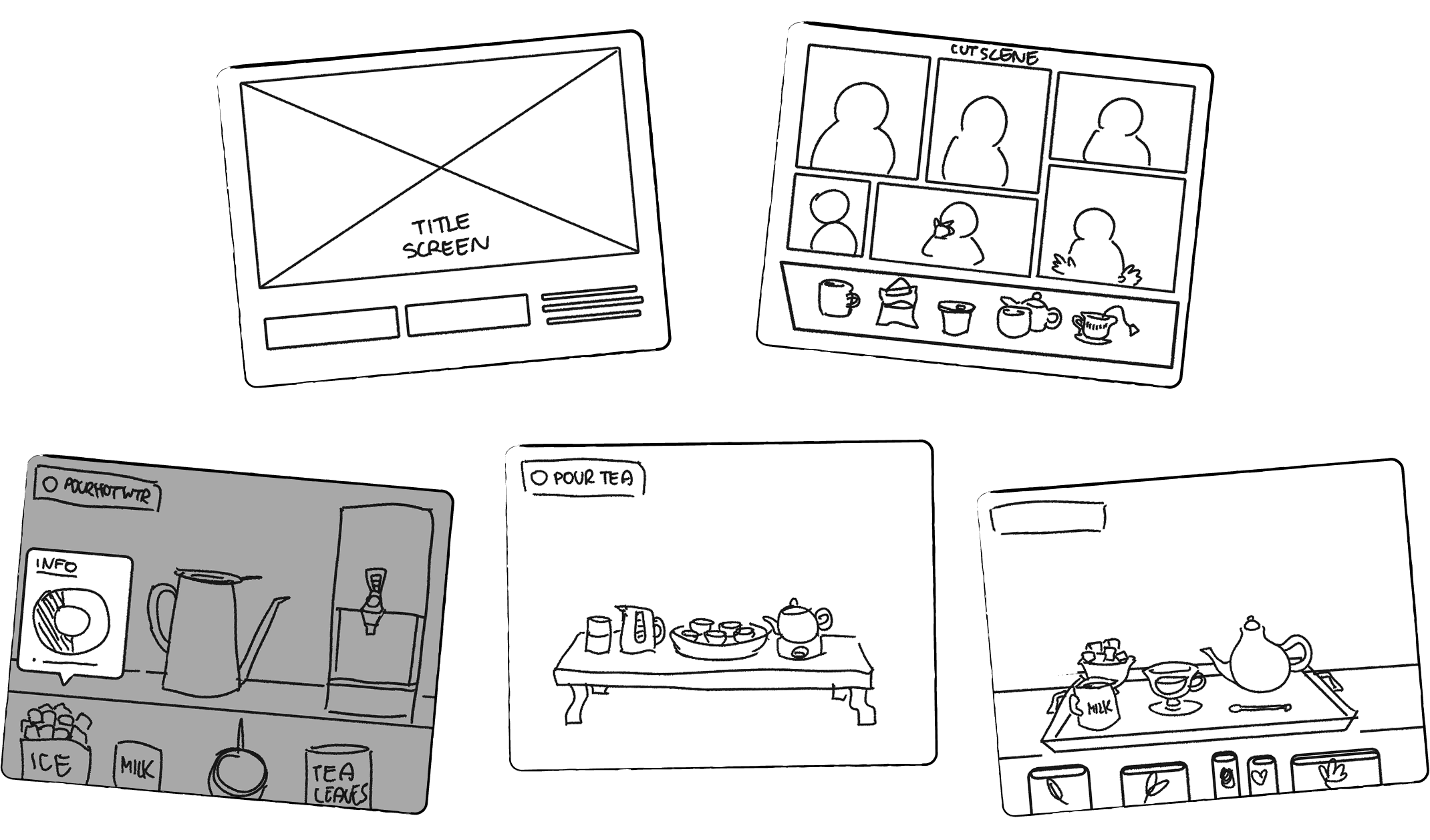
Storyboards for the title screen, intro cutscene and three chapters.
A few inspirations we drew from included 'The Search For My Kimchi' by Alvin Chang and staple point-and-click games like the Putt-Putt series or, personally, Madeline's European Adventures.
Week 1: Programming
First, I had to get the bones of the game up and running. Mainly, the pop-ups, and the point-and-click system. I spent arguably too long experimenting with placing pop-ups above and beside each object, before I realised centralising the pop-ups would be both easier to program and clearer for players to read.
For the point-and-click system, storing the previously-clicked object as a global variable and combining it with the next object clicked on. The result could be a sprite change, a sound effect or a success message.
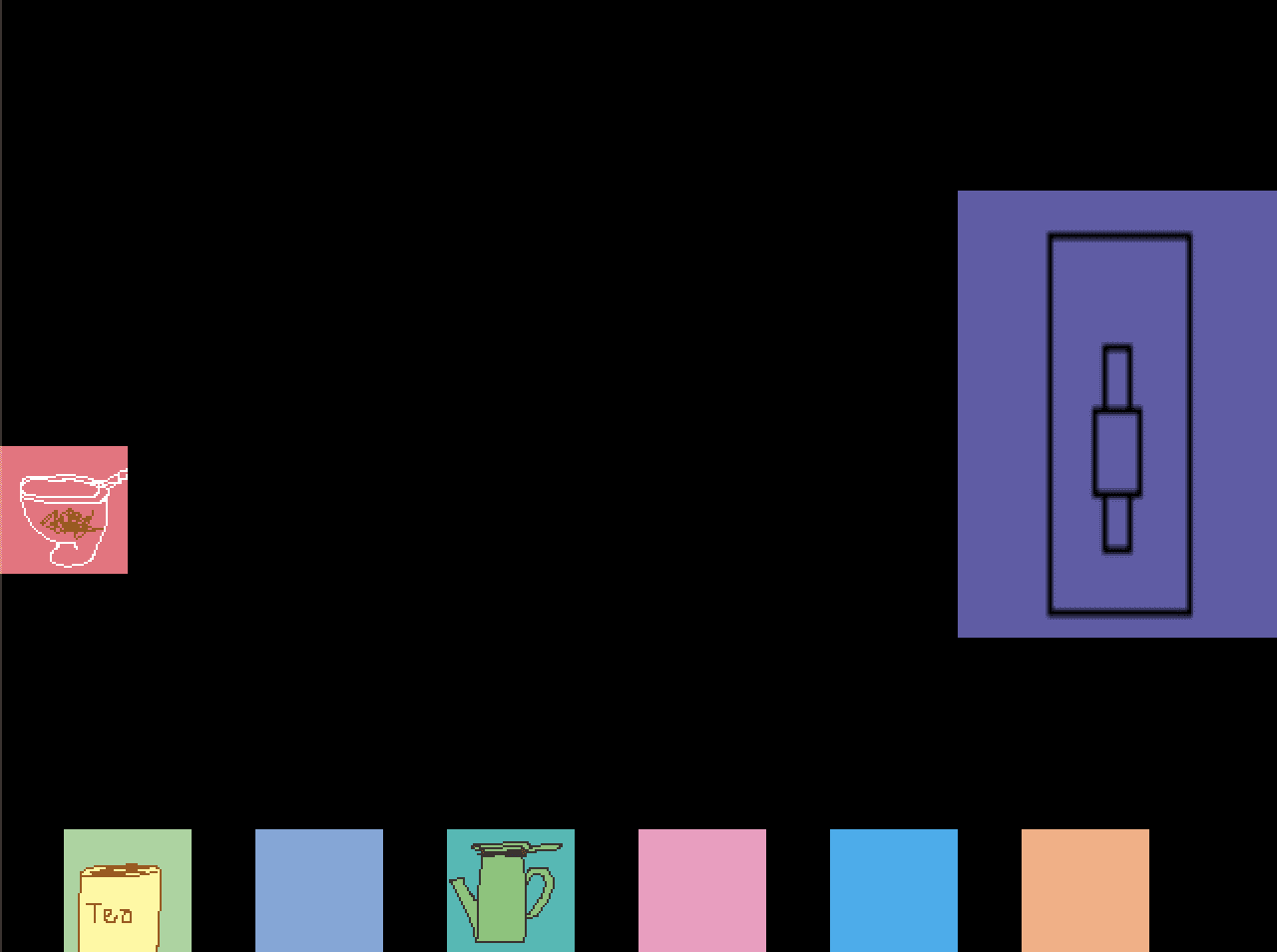
Without art, I used placeholder assets instead: a little ugly, but necessary. Click the image above to see a video of two early prototypes.
Week 2: Art
Once I knew what assets I needed, I switched to drawing the visual assets. But with my internship ending, I didn’t have time to draw each scene from scratch. So, I modelled each scene in Blender first, then referenced it while drawing in Clip Studio Paint.
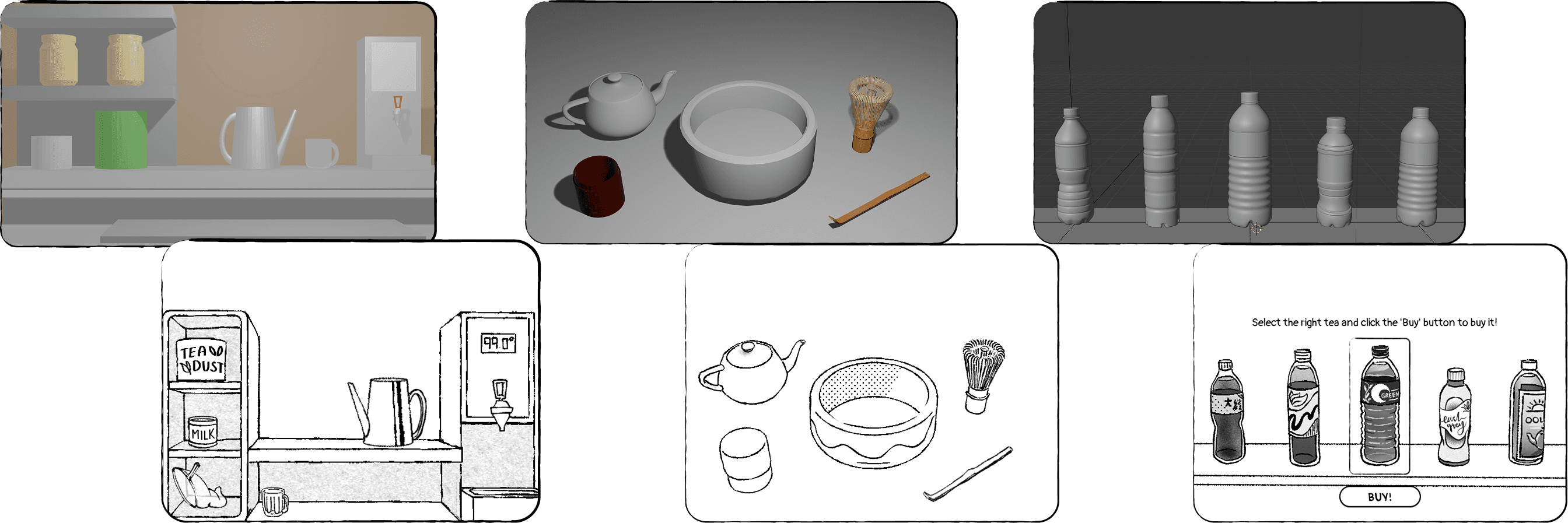
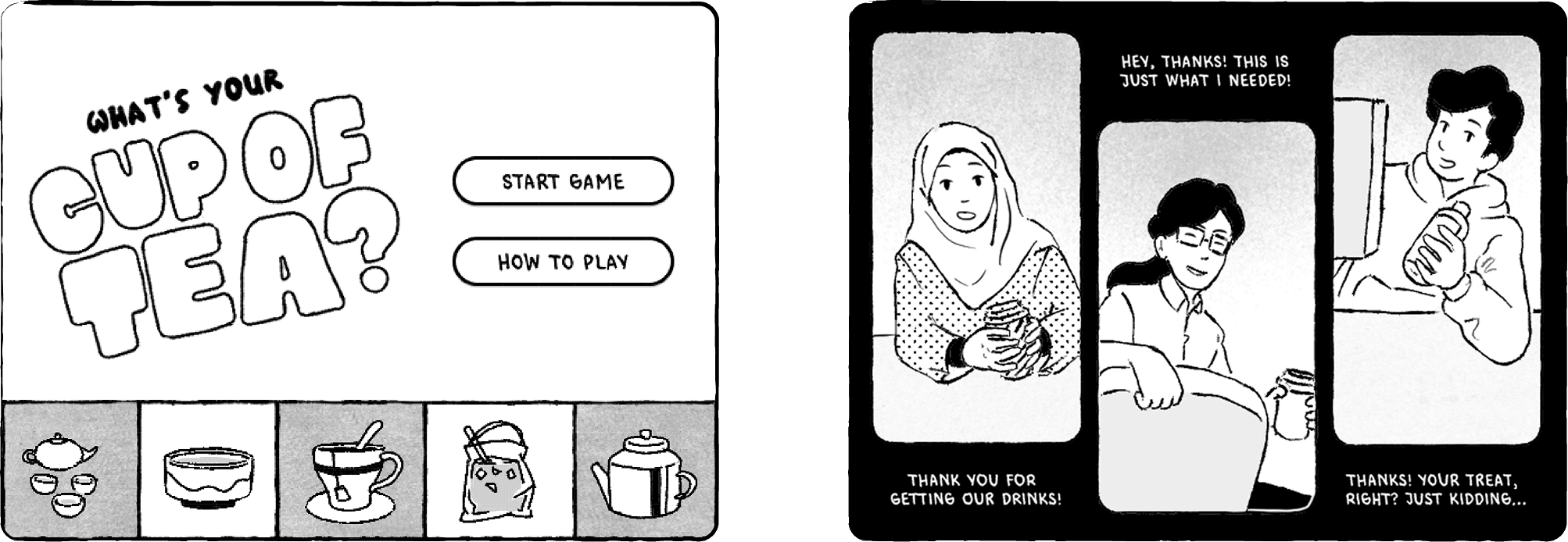
Then, I spruced up the art for the splash screen and cutscenes.
Week 3: Sound
Once I'd finished up the art, the next priority was the sound. Part of the charm of early point-and-click games was always the sound! These little effects delight the player and indicate that their actions affect the game.
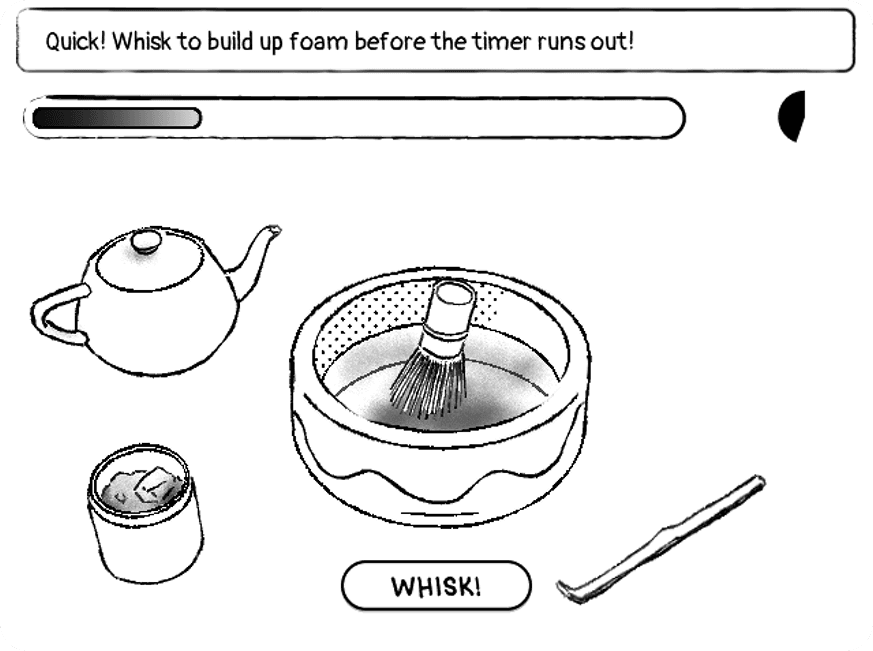
Royalty-free music was easy enough to find, but finding convincing sound effects was harder. For example, for matcha whisking, I used the sound of a broom sweeping. When the player adds condensed milk to the teh, they hear a spoon clinking against the cup as it stirs.
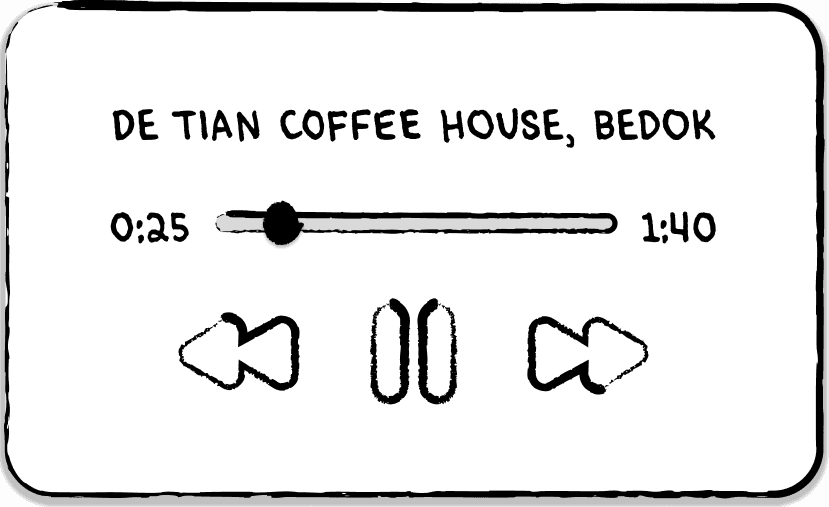
Generic cafe ambience could never capture the feel of a real local kopitiam. So, I set out to do a field recording at the coffee shop next to our office.
Last thoughts
On my last day with Kontinentalist, I finally finished the game and shared it with my team. With every game I make, I learn so much about code, but also about game design: UI, signposting and interactivity. Making games is an interdisciplinary experience that’s challenging, freeing and fulfilling all at once!